
In short: Sand sculptures stand because thin films of water bind each grain to its neighbours. The best sand is angular and a little silty. Professionals pack sand and water into plywood forms in thin, tamped layers, then remove the forms and carve from the top down.
The question asked most often on the beach at Harrison was “What holds sand sculpture together?” This guide answers it, drawing on the technique notes from the old Harrison contest website and on published science. This site is independent and is not run by any contest organiser.
Water is the glue
Each grain of sand is attached to several others by the surface tension of tiny droplets of water held between them. These small “liquid bridges” pull the grains together. Too little water and the bridges are too few; too much and the grains float apart. A well-packed block of damp sand can be surprisingly strong, which is why water is the most important material in sandcastle building (Physics World).
The old Harrison notes give one practical tip: add sand to water rather than water to sand. Pouring water onto a dry pile and hoping it mixes usually leaves dry pockets, which fail later when you try to carve fine detail.
Not all sand is the same
- Surf-rolled sand: most ocean beach sand has been rolled back and forth by the tide for centuries, so its grains are rounded. Even with plenty of water, round grains behave like ball bearings and will not stack high.
- River-mouth sand: beaches near river mouths receive fresh, fine silt that helps the sand stick. A few miles away the sand can behave quite differently.
- Old coastlines: the older the coastline, the more surf-rolled the sand tends to be.
- Salt, shells and seaweed: all weaken the bond between grains.
At Harrison Hot Springs the beach sand was dredged from the bottom of Harrison Lake, where currents had laid it down since the last Ice Age. It is highly angular and very silty; one California master sculptor, Larry Nelson, called it “mud”. That is why teams there could regularly build central pieces more than twelve feet tall and set three world height records.
The West Coast technique
Most professional sand sculptors use what the Harrison notes call the West Coast technique: compressing sand and water inside plywood forms of different sizes.
- Build the forms. Cut sheets of 5/8-inch plywood into two-foot-wide strips and join them into open boxes with 2×4 stringers, leaving the stringers long so the sides can be nailed or pinned together.
- Stack them. Large forms go at the bottom and smaller ones on top, like a wedding cake, roughly following the shape of the planned sculpture.
- Fill in layers. Pour in water and sand a few inches at a time.
- Tamp each layer. Pound each layer firmly with a hand tamper to drive out air and pack the grains tightly.
- Remove the forms from the top. Take off the top form first and carve that section before moving down.
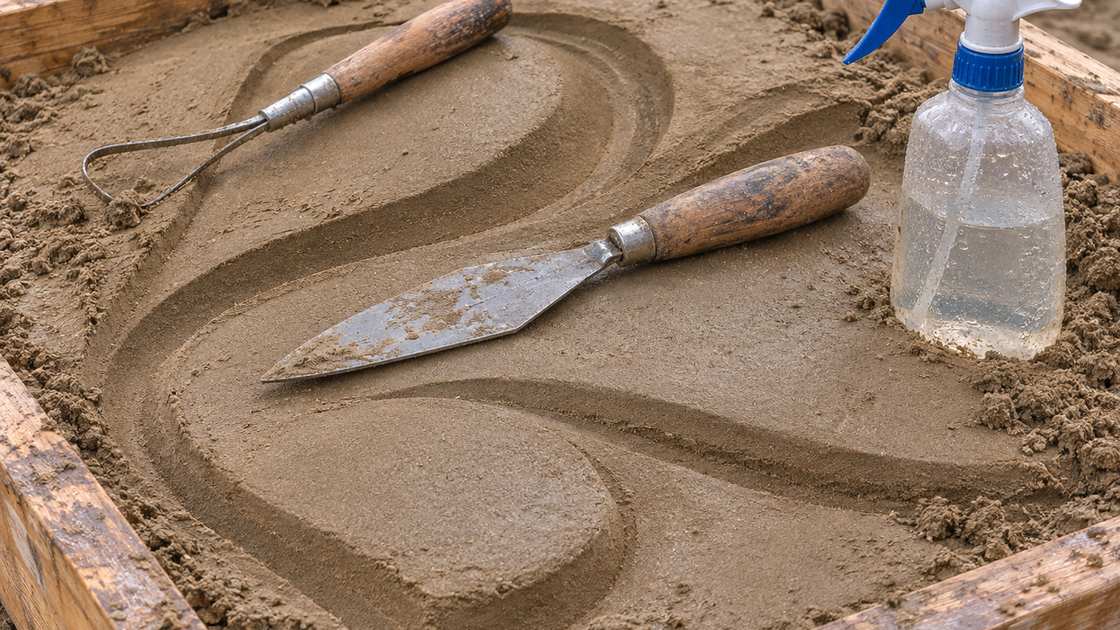
Carving from the top down
Sculptors always carve from the top down. Falling sand from above would ruin finished detail below, and working downward keeps the heavy, wide base intact until last. The collapse of the first Pacific Northwest Sandshapers record attempt in 1990 shows the opposite risk: too much bulk at the top cannot be held up once the lower forms are removed.
Common tools include palette knives, masonry trowels, spoons, drinking straws for blowing away loose grains, and soft brushes. Once finished, many large sculptures are misted with a weak solution of water and glue so the surface survives wind and light rain.
Try it at home
- Use a bucket with the bottom cut out as a simple form.
- Mix sand into water until it is like wet cement, pour it in and tap or tamp it firmly.
- Lift the bucket, then carve from the top with a spoon or knife.
- Keep the base wider than the top until you are confident.
Common questions
What holds a sand sculpture together?
The surface tension of small amounts of water between the grains. Good compaction and angular grains make the bond much stronger.
Why do some beaches make better sandcastles?
Sand with angular, varied grains and some fine silt holds better than rounded, surf-rolled sand. Salt, shells and seaweed weaken it.
How long does a sand sculpture last?
It depends on the weather and on whether the surface is sealed. The Harrison sculptures typically stayed on the beach for several weeks, into October.
Sources
- Physics World: Top tips for super sandcastles
- The Globe and Mail: Harrison Hot Springs
- Archive text of the Harrison Hot Springs contest’s former website (“How Do They Do That?”).